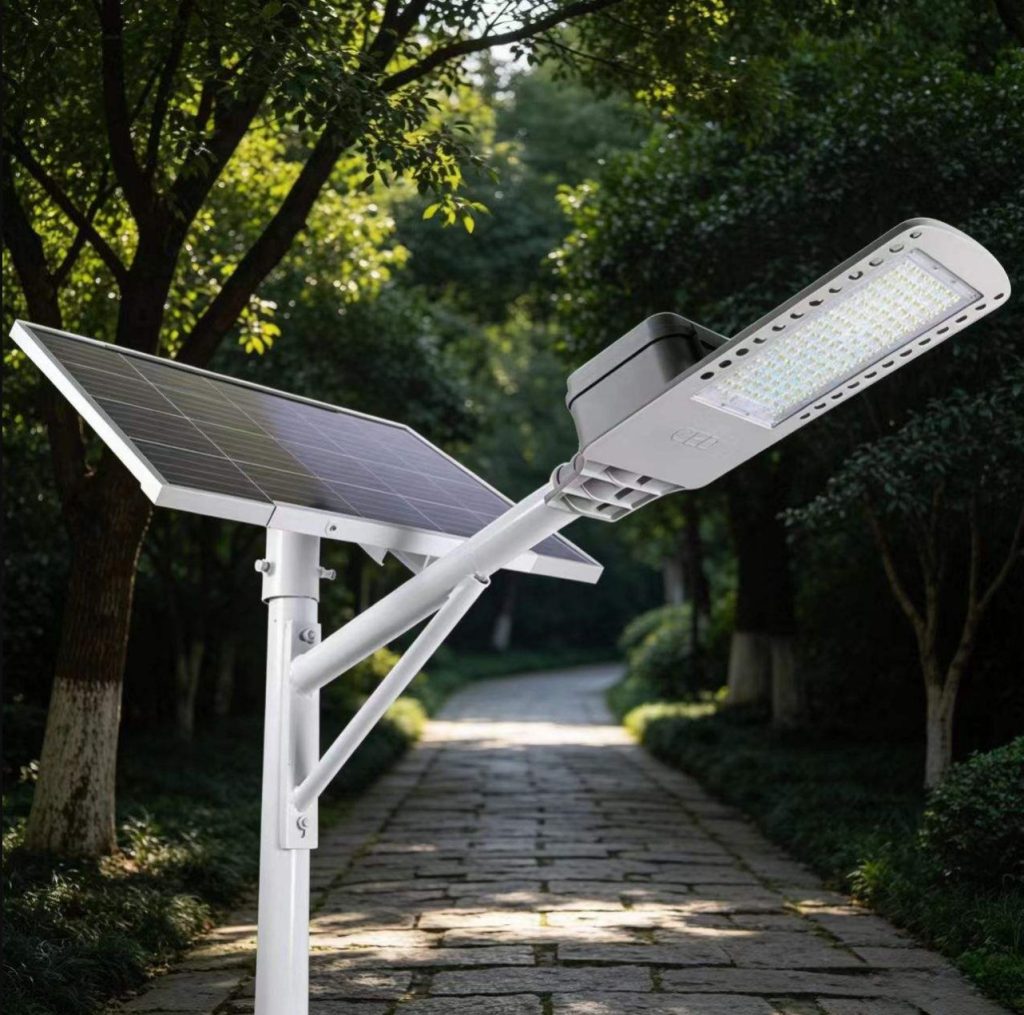
Many purchasers confuse power rating with real-world lighting performance. The decisive factor is local sunshine duration, because it directly decides the actual working hours a solar light can deliver night after night.
Start from your local peak sun hours. In a high-irradiance market such as the Middle East or North Africa you may see 5.5–6.5 peak sun hours, while parts of Southeast Asia or Central Europe can drop to 3–4. Panel wattage and battery capacity must be sized for the worst month of the year, not the annual average, otherwise the light will fail in the rainy season.
Then add a realistic autonomy requirement: how many consecutive cloudy days should the light survive? A 2–3 night autonomy with a lithium iron phosphate battery covers most municipal and residential projects, while remote highway projects often justify 4–5 nights. Sending us your location, required lighting hours and pole height is usually enough for our engineers to return a correctly sized configuration.